Turn your stock into
a pool ofcustomers who have already paid

MulanXu® Mulan Rewards gives you three ready-made routes: the Card Redemption Store brings real paying users into your product pool; the Mulan super-symbol turns a single cooperation into a licensable brand asset; the AI smart vending cabinet lands online traffic on physical sites.

16M
user assets consolidated
real users who completed the 16-type assessment online
16.5%
Paid conversion rate
conversion from an anonymous quick test to a paid user
276
Trademarks · Patents · Copyrights
ready for licensing and co-branding
4 cities
Hangzhou · Hong Kong · Dubai · United States
a global rollout network

Mulan is more than two characters —
it isa Chinese symbol the whole world recognises

Hua Mulan is the only Chinese character archetype understood instantly in both the East and the West. MulanXu® has turned that symbol into an operable, licensable, replicable business asset.
MulanXu Hua Mulan portrait trademark MU LAN · MULAN · WORD AND MARK

Why this symbol brings business

It needs no explanation. The four characters for serving in a father's place carry recognition, low memory cost and cultural legitimacy — on a product, on a cabinet, on a co-brand, the first time a customer sees it they know who it is. That is rare globally: most IPs need years of education, while Mulan is understood at a glance.

MulanXu® has already built the symbol into 4 interactive dramas, a 16-type personality assessment, 4 game formats and a full derivative line. 276 trademarks, patents and copyrights mean it can be licensed, co-branded, made into blind boxes and printed on packaging without renegotiating IP ownership.

For a merchant the meaning is direct — what you take away is not a sticker but a symbol that can be remembered, bought again and spotted on a shelf at a glance.

4
AI interactive dramas
licensable adaptations and co-brands
16
personality assessment system
users leave with a preference tag the moment they finish
4
game and interactive formats
chess, card games, sand-table exercises and courses
1
AI smart vending cabinet
puts the symbol on physical sites

Public rules,
so merchants dare to put their goods in

The redemption store is not an ad slot; it is a settlement-ready redemption game. The clearer the rules, the more willing merchants are to put real, good goods in.

Hold a voucher

Users pay in a Mulan assessment or interactive drama to earn Xinxiang vouchers. Every voucher carries a type, an event pool and a single redemption entitlement; no cash-out, no discount-out.

Pick a route

Every product publishes one public route: a specified type, a combination total, or any part of it. The system shows what is still missing for each route, with no hidden rush conditions.

Lock voucher, lock stock

One transaction locks the voucher, the stock and the quota; if any step fails, everything rolls back. Quotas, versions and deadlines are identical for every user.

Platform redemption

The platform purchases, inspects and ships against each redemption order, and carries redemption and after-sales. Consignee details are handled only for the purpose that requires them.

Versioned rules

The same event and the same rule version apply to everyone: no added threshold as the target draws near, no hidden conditions, no retroactive reduction of benefits. Rules and product records are traceable.

Merchants do not carry redemption

Procurement, shipping, after-sales and freight and tax sit with the platform; supplier-side problems are never passed on to users who already met the target. Once your goods enter the pool, they enter the redemption chain.

Stock that can be verified

Reference price, SKU, shelf life, supply cost and fulfillable stock are verified item by item. Goods with inflated list prices are rejected; goods whose fulfilment is unverified never enter redeemable stock.

No ad spend —
swap it forcustomers who have already paid

You put in products and a share of goods value; what you get back is paying users from someone else's platform — and the contact details they are willing to leave.

A new high-intent audience

16M users have already completed the 16-type assessment online, and they arrive at redemption with clear preferences. Not pass-by coupon grabbers — people willing to act for the one item they actually want.

Immediate transactions

Your products enter the cross-industry redemption pool and get redeemed alongside vouchers. Competition happens on the same shelf, and your exposure comes from being chosen, not from being scrolled past.

Contactable assets

Only when users voluntarily consent at redemption do you receive contact details and purchase preferences within that consent scope, for your own service and repeat purchase. Unconsented users provide no personal information and can still redeem normally.

Co-branding opportunities

Xinxiang vouchers can go out with your products and your brand campaigns, turning a one-off promotion into a long-term relationship instead of a price war.

A private-domain entry point

Collecting cards, redeeming and completing sets is itself a repeat-purchase touchpoint. Store communities, campaigns and a second purchase now have a natural reason to exist.

Brand momentum

Co-branding with the Mulan super-symbol puts a Chinese symbol the whole world recognises on your shelf. Shelf recognition and negotiating power both move up.

What merchants really care about is not how much traffic there is, but whether the people who come are actually customers. The Card Redemption Store only brings you the people who have already paid — you save not just ad spend, but the cost of filtering.

Mulan Rewards · Private-Domain Alliance cooperation logic

Users want to redeem, merchants want to spend —
and the platform earns on both

A three-way win is not a slogan. It is three sets of books that each balance: users get what they came for, merchants compute their own acquisition cost, and the platform keeps the rules and the fulfilment tight.

Why users redeemUSERS WANT TO REDEEM

They redeem what they actually wanted

Every card has one published route — a specific type, a bundle, or any part of it — and the screen shows exactly how many more are needed. No hidden conditions, no threshold games. Users do not collect for collecting; they collect to land on the one thing that fits.

Low enough to act on

Five cards for a tea egg, 60 or 90 for a gift set, and 16 Mulan flavour formulas redeemable for phones, tablets and laptops. Every card has a visible destination, progress is always legible, and the moment of redemption is certain.

The reward matches the result

Test first, redeem second. Flavour, signature formula and product line up, so what arrives matches the result you got. It is not a bundled giveaway — it is the item you picked for yourself.

Why merchants say yes · the acquisition-cost mathMERCHANTS WANT IN · CAC

You buy people who already paid

Cards only ride out with paid orders, so every holder is a real paying customer. The people redeeming your product have paid somewhere else first. Whether they become your customer is up to them: they walk in, experience it, and pay again on their own.

Now there is one cost line

The card-service fee already covers the face value and the fulfilment service. The merchant owes no separate in-kind value, no fulfilment fee and no franchise fee. It is not the price of a new customer — the two must not be conflated, but the cost is a single line. The unit price is confirmed under the plan after review and is not published.

You can compute your break-even line

Break-even sales = total card fee ÷ contribution margin. Numerator and denominator are both your own operating numbers: how many cards, what each costs, what a redeemed order earns, and what is left after delivery, discounts and refunds. Compute it first, then decide whether to scale.

How one campaign adds up Worked example · not a quote

Card fee (the only cost)confirmed under the plan; the unit price is not published¥5,000

Break-even sales¥5,000 ÷ 40% contribution margin¥12,500

Break-even units¥12,500 ÷ ¥50 order value250 units

Reach ¥20,000 attributed sales× 40% contribution margin¥8,000 contribution

Net result¥8,000 − ¥5,000 card fee¥3,000

Safety margin¥20,000 ÷ ¥12,5001.6×

Receipt rate neededderived from your issue volume — see the calculatorset by the plan

Card fee settlementused and unused counted apart¥5,000 separately

Change one variable and the answer flips

The more card fee you commit, the thinner the safety margin. Reaching ¥20,000 of attributed sales still yields ¥8,000 of contribution, so a fee of ¥10,000 instead of ¥5,000 turns ¥3,000 of net into −¥2,000. The plan must therefore be matched to your issue volume: start at a 1.6× safety margin, and once volume is proven scale the commitment and raise the benchmark to ¥25,000.

Always measure contribution margin after delivery, discounts and refunds rather than using the 50% gross margin. The card-fee unit price and the platform's fulfilment terms are not published on public pages; the cooperation plan and contract annexes approved after review govern. Figures are local assumptions, not a quotation or a return promise.

Why the platform wins tooTHE PLATFORM WINS TOO

Revenue you can trace

The card-service fee is the direct revenue line; above it sit repeat-purchase revenue share and data and service fees. Cabinet revenue share and IP licensing run on the same rule set and the same user pool. The platform charges merchants no promotion fee.

Fulfilment that stays controlled

Purchasing, inspection, shipping, after-sales and logistics sit with the platform. Card lock, stock lock and quota lock commit in a single transaction, and any failure rolls the whole thing back. Rules are versioned and identical for every user.

The more it is used, the sharper it gets

Assessment brings users with known preferences; the marketplace and the cabinet catch the redemption; the transaction feeds preference back into the recommendation slots and the restocking plan. The better merchants' goods sell, the sharper the recommendation, the more users redeem.

Not on traffic —
onpaid conversion rate

Mulan assessments run on a zero-marginal-cost AI base: the more users, the lower the cost per delivery; the higher the paid conversion, the more direct the margin. That is the fundamental difference from traffic-driven content.

¥42.5
Revenue per paying user / month
On the current parameter set
¥22.5
Contribution margin per user
Revenue 42.5 − direct cost 20.0
52.9%
Contribution margin rate
Before acquisition and period costs
16.5%
Paid conversion rate
Paid conversion is product margin

Why paid conversion equals margin

Twelve in-house modules of the AI emotional engine push marginal cost close to zero. As scale grows, revenue rises while unit cost does not — something traffic-driven short drama cannot do.

User value climbs the funnel

From a one-off subscription in the teens, to deep reports and relationship analysis, then on to themed salons and premium membership years, user value compounds along the same chain.

Assessments feed the store

Assessments bring users with preferences; the store catches exactly this group's redemption demand. The two lines share one user pool and lift each other's conversion.

One cabinet —
a24-hour micro-store that never closes

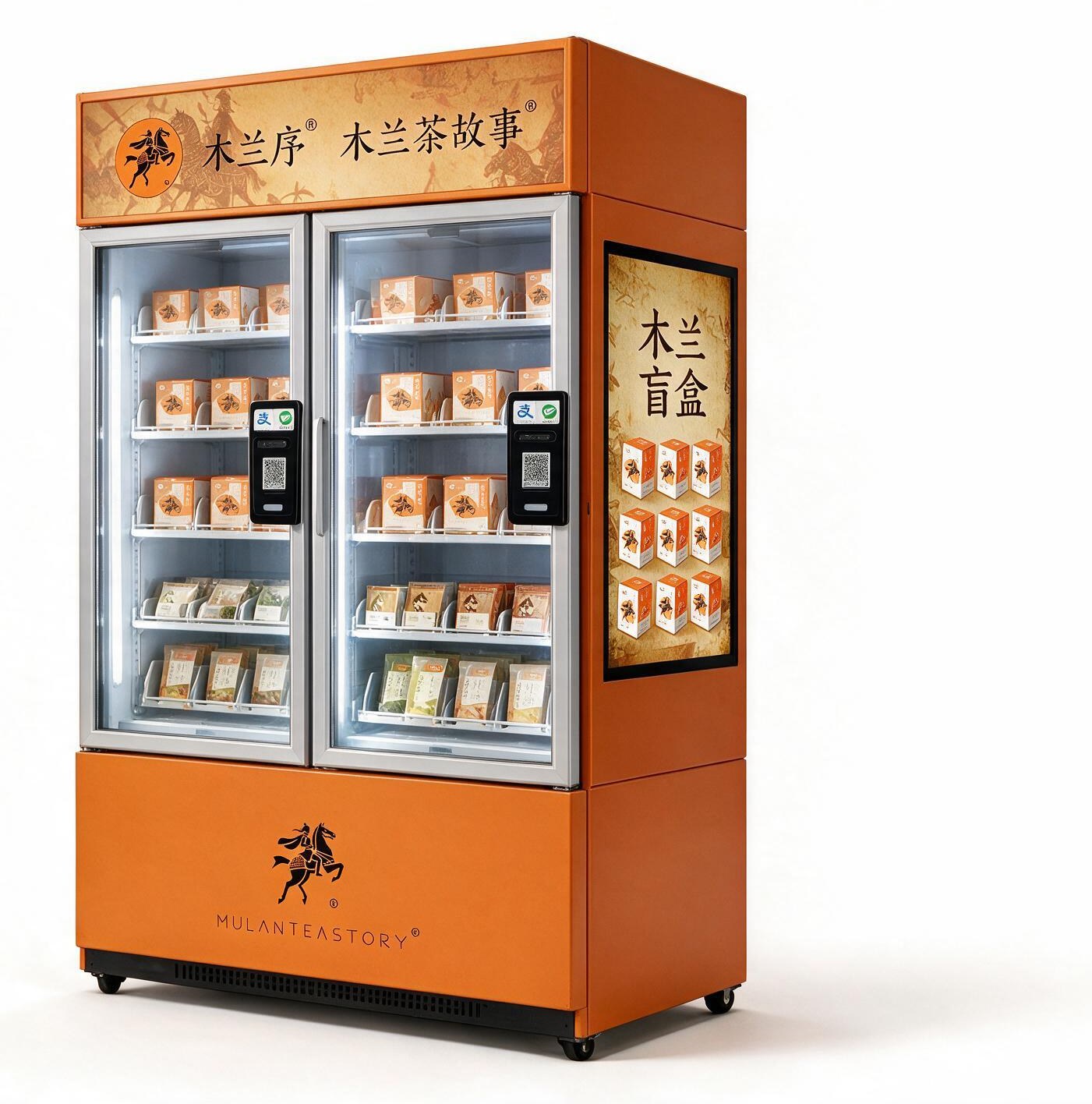
You provide the space, we provide the cabinet. 0–10°C cooling, scan and go, take it and leave; stock levels, temperature control, routing and daily settlement all run in the back office. No capital tied up, no headcount added, no staff training.

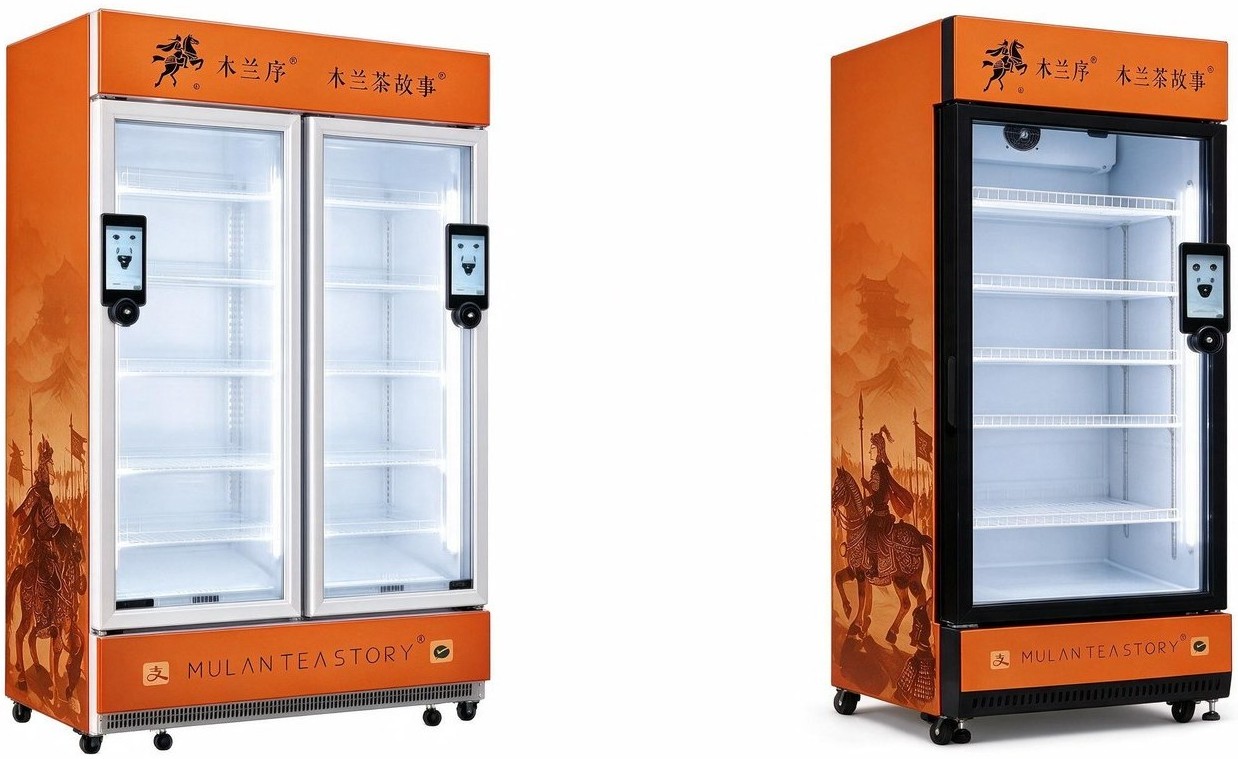
MulanXu AI smart vending cabinet

980L · TWO DOORS

CABINET 980 · 2 DOORS

The workhorse cabinet for high-traffic sites such as hotel lobbies, clubs and banquet exits. Two doors, two screens, more lanes — suited to fast turnover and co-branded blind-box display.

MulanXu AI smart vending cabinet 320L

320L · ONE DOOR

CABINET 320 · 1 DOOR

A light cabinet for meeting rooms, lounges and small stores. Small footprint, fast restocking — good for proving sell-through at one site before scaling.

What sells inside

Three tea-egg flavours (tea aroma / green-numbing / rock spice), 18 self-heating milk teas and coffees, self-heating five-red-herb soup, 16 classic teas and flower-fruit teas, 16 personality teas, 16 wines and 16 tea drinks, six-box tea gift sets, plus chess sets, cards and co-branded props.

Where the traffic comes from

Not from passers-by. 16M members took the 16-type assessment online, and the platform pushes them to the cabinet by location; the assessment names your signature flavour, so at the cabinet there is nothing to choose — you take the one that is yours.

How it settles

Revenue share on actual in-cabinet sales, settled monthly, with electricity and taxes as set out in the contract. Sell-out, flavour preference and repeat-purchase data flow back to the platform, which decides what to restock next and who to push it to.

How the cabinet is stocked,
and how online users walk to your door

A cabinet takes less than one square metre, and it is where 16 million online users cash in what they earned. Both the stocking and the hand-off are engineered, not improvised.

0.86 m²
980L · two doors
1215×710×2022mm
0.30 m²
320L · single door
600×500×1980mm
0–10°C
Forced-air cooling
220V, plug and play
Scan / NFC
Face entry · optional display
176kg / 50kg
How the redemption space is laid outHOW THE SHELF IS STOCKED
Top shelf · eye level

Six-box gift sets, co-branded blind boxes, chess and card sets — slower, higher-ticket items sit at eye level, so the reach to the door is shortest.

Middle · ambient, grab and go

Tea eggs in three flavours (tea fragrance, green hemp, rock spice), 18 self-heating milk teas and coffees, four-pack self-heating five-red soup — picked up and gone, with no cold energy used.

Bottom · 0–10°C cold zone

Six-can classic rock tea, 16 fruit-tea variants and 16 archetype tea drinks (0 sugar, 0 fat, 500ml) — held in the forced-air zone year round.

Archetype lane · one lane per type

16 archetype teas and 16 archetype tea drinks, each lane labelled with its archetype. Someone who has tested their type walks up and takes their own lane without choosing.

Pickup mouth · cards and co-branded goods

Xinxiang cards, blind boxes and co-branded items sit next to the pickup mouth, so "take the goods, take the card, collect more, come back" happens by itself.

What the merchant provides 1 m² of space One 220V outlet Site access and a service lift One event space One internal briefing
How online becomes offlineONLINE TO OFFLINE
Test online, get a taste profile

Users finish the 16-type assessment in the marketplace or mini program, leaving with a signature archetype, a flavour profile and a clear idea of which cards they are collecting.

The platform pushes by distance

"Eggs near you" — the nearest cabinet and the stores running the campaign are pushed to the user's screen. The traffic is not stumbled upon; it is delivered by computed distance.

Open, scan, take it

Scan, NFC or face entry opens the door, and the right item is in hand. The same scan completes the redemption and issues the card — one action, two jobs.

Eat, collect, redeem

A Xinxiang card is issued at the moment of redemption; users collect, trade for gifts, trade for a phone, and come back to your store and your product page.

One cabinet, one monthONE CABINET, ONE MONTH
10–60 orders / day
Daily order range per cabinet
depends on footfall and lane mix
¥36
Average order value
single-cabinet model
¥10,800–64,800
Monthly sales per cabinet
10–60 orders × ¥36 × 30 days
15%
Site revenue share
¥1,620–9,720 per month

After ¥1,000 of monthly fixed cost, a cabinet's monthly cash surplus runs from ¥1,311 to ¥12,867 — 12.1% to 19.9% of monthly sales. Eight weeks is one assessment window, and the decision is made on real sell-through.

AI smart cabinet · single-cabinet model

Marketplace → store

Cards issued online can be redeemed in your store, and the redemption counts as in-store performance. Paying customers from the alliance are sent to your counter by the same published route.

Store → marketplace

Cards given out with store campaigns, openings and packages flow straight back into the redemption marketplace, moving offline traffic into online repeat purchase. Your goods are also being redeemed by other merchants' users.

Store → cabinet → store

The cabinet sits by the door, the user completes an instant purchase, and the scan issues a card that walks them back inside. The cabinet is a second till — and the cheapest private-traffic door you will own.

Your goods arrive
with their own card, into the recommendation

Two things happen at once: a merchant's product ships with a Xinxiang card by default, and a merchant's product enters the 16 archetype recommendation slots — so the user knows which of yours to buy before they click.

01Fengqi
02Jifeng
03Mingzhu
04Liuhuo
05Hanren
06Guxing
07Qianyuan
08Jingzhe
09Panshi
10Changfeng
11Houtu
12Runze
13Xuantie
14Youlan
15Gujing
16Jingshui

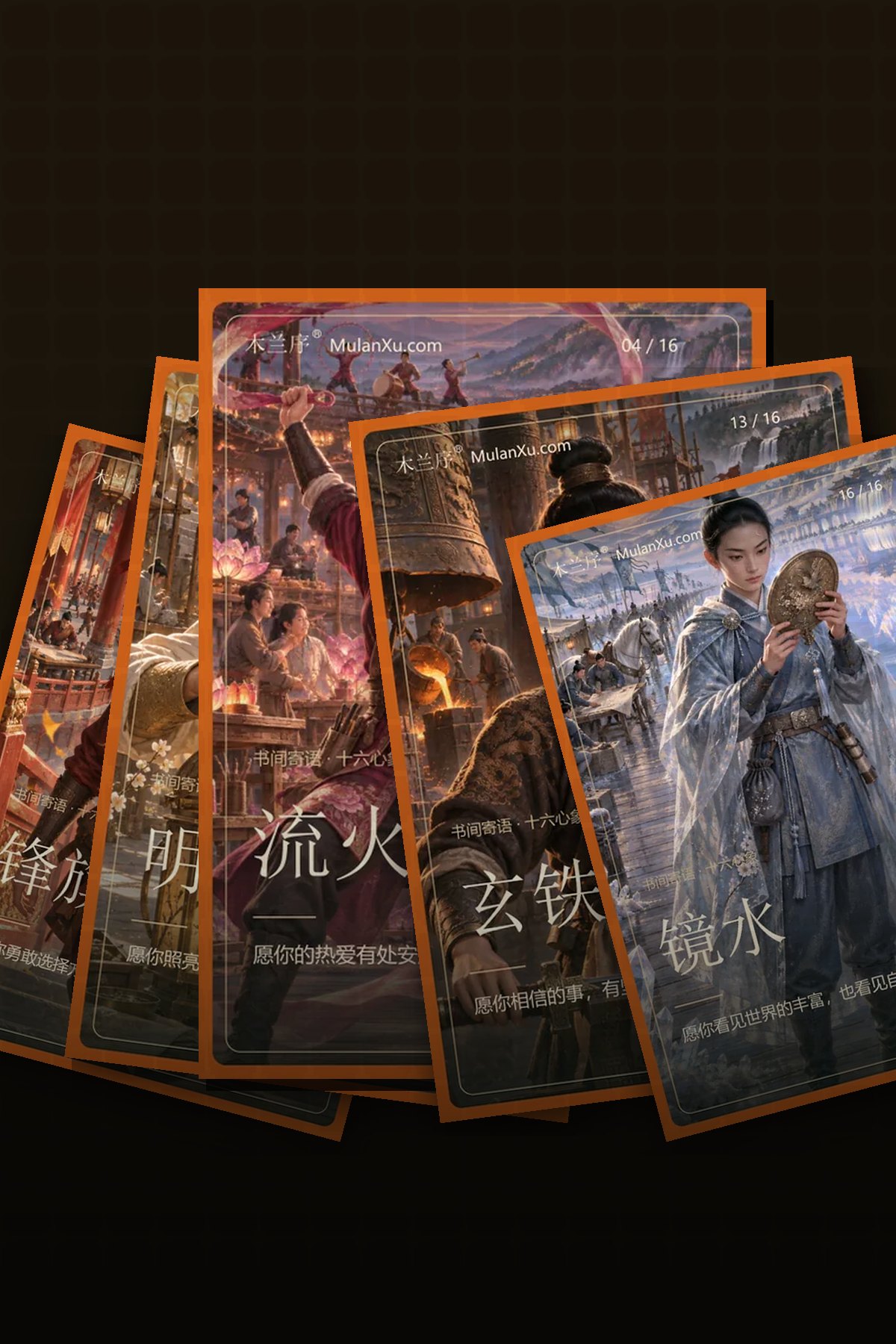
16 Mulan Archetypes, one recommendation slot each. What a user sees on the marketplace shelf and inside the cabinet is ordered by their own type result.

A slot is not bought

The user completes the 16-type assessment, the system returns a signature archetype, and the marketplace shelf and cabinet lanes are ordered by archetype tag. Merchants bind their SKU to the matching archetype slots — the exposure comes from being chosen, not from being scrolled past.

How to bind

Pick the archetypes your product fits: a serious gift set can bind to Hanren, Gujing or Houtu, a lively tea drink to Jifeng, Liuhuo or Jingzhe. You can also cover a whole group. The 16 archetype teas and 16 archetype tea drinks are the ready-made example — one product per type.

What the slot buys you next time

Test once and you know which one to drink; no more choosing. Sell-through, flavour preference and repeat-purchase data flow back to the platform, which decides what the next cabinet restocks and who it is pushed to.

Product comes with its card · four ways to run itPRODUCT COMES WITH ITS CARD

Cards with every purchase (on by default)

After the order completes, your product ships with a Xinxiang card by default — inside the package or as a service card in the parcel. The buyer holds the card immediately, with your brand on the face. The card-service purchase price is an operating figure, not published on this page, and not the value the consumer redeems.

One item, one code

Put a unique code on the product: scanning opens the card, verifies authenticity and shows the redemption route. The card binds to the order, with server-side single entitlement and one redemption — a copied code adds nothing.

Co-branded card runs

If you want a themed campaign, issue your own branded Xinxiang card set. The card face, the marketplace routes and the campaign entitlements are bound in advance, and the theme carries its own reach.

Card travels with the goods, goods enter the pool

Your products enter the redemption marketplace: users collect your cards and redeem your goods. With voluntary authorisation, you receive contact details and purchase preferences within the authorised scope, for in-store service and repeat purchase.

The best version is simple: let the user get your card first, and let your goods go out with it.

Private-domain alliance · co-branded card and recommendation play

Two packages, four outlets,
six numbers you can check

We do not promise a fixed number of new customers and do not guarantee you break even. What we can do is collapse your cost into one line, write the rules down, and break the result down to a granularity you can verify.

Two packages · pick by how much you want to shareTWO PACKAGES

Package A · Experience (recommended start)

Priced under the cooperation plan; the starting volume and the amount are confirmed after mutual review. Benchmark: ¥20,000 of attributed sales within 90 days. If you miss it, the service fee attributable to the shortfall is returned in proportion, or extended as service of equivalent value — written into the contract, not promised verbally. All repeat-purchase revenue stays with you. Shipping is paid by the user on orders below ¥100 and covered by the platform from ¥100.

Package B · Co-growth

Priced under a longer-term plan; the starting volume and the amount are confirmed after mutual review. A service fee is booked on attributed self-paid repeat orders at the ratio agreed in the contract, with a time cap; the platform carries a higher share of fulfilment and after-sales. Suits brands with a solid repeat-purchase base that want to share the load for the long run.

One inventory, four outletsFOUR OUTLETS, ONE INVENTORY

Outlet 1 · Regular redemption

Your products enter the cross-industry redemption pool and are redeemed on demand by customers who paid elsewhere.

Outlet 2 · Direct repeat purchase

With voluntary consent, users enter your private domain and repeat-purchase flow; that revenue follows the terms of your package.

Outlet 3 · Blind box

The same goods become co-branded blind boxes, multiplying the reach without increasing the goods value.

Outlet 4 · Smart cabinet

You provide the space; the platform provides the cabinet, goods and maintenance, sharing revenue on actual in-cabinet sales with instant offline purchase.

What you get · six metrics and the dashboardTHE DASHBOARD

Effective reach rate

Cards registered ÷ cards shipped with goods. It measures whether you ship the card and how visible it is — the first operating metric, typically 20%–40% in a pilot.

Receipt rate

Orders actually received ÷ cards registered. The denominator is registered cards, not shipped cards, and refunded orders are deducted. It sets the platform's break-even line and what you can honestly report.

New customer rate

New customers for the brand ÷ users who received goods. New means no self-paid purchase from you in the previous 24 months. Target ≥30%.

First self-paid rate

Users with a self-paid order within 90 days ÷ users who received goods. Self-paid means actual payment above zero, excluding shipping-only orders. Target 8%–15%.

Referral coefficient

New self-paid users from referrals ÷ users who shared. Attributed by personal code; refunds excluded. Referral incentives are published as rules in this phase only, and scale-up waits for proof of base redemption conversion.

Payback period

Total card fee ÷ average daily contribution profit, measured after delivery, discounts and refunds. Target ≤90 days, then real data decides whether to expand.

Every ratio is published with its absolute denominator, and every number drills down to merchant × card batch × archetype. Percentages from small samples are never written into a contract, and never used as a promise.

Mulan Rewards · merchant dashboard definitions

One base, four revenue lines,
three years to¥5B turnover

The technical base is built once and reused across four revenue lines — online, enterprise, offline and licensing; the Card Redemption Store and smart cabinets connect content and traffic to real transactions.

Year one ¥2B+ The consolidated user assets plus the store and cabinet lines all scale at once, forming the first layer of scale.
Year two ¥2.6B+ More than 30% annual growth, with the user base and merchant supply expanding together.
Year three ¥3.9B+ Compound growth holds at 30%+, with the four-city network adding the increment.
Three-year target ¥5B / year ¥5B annual turnover reached in year four, covering online, club and offline scenarios.

Revenue 1 · Online paid products

Pay-per-use AI interactive dramas, in-depth relationship assessment reports and annual memberships. A zero-marginal-cost base where repeat purchase deepens with the content matrix.

Revenue 2 · Card Redemption Store

The card-service fee — face value and fulfilment included — is the direct revenue line; above it sit repeat-purchase revenue share and data services. A falling card-fee share and a rising repeat-purchase and data share is what an upgraded model looks like, rather than a bigger card-issuing business.

Revenue 3 · Offline scenarios

Smart-cabinet revenue share, store and cultural-tourism co-operation, corporate team-building and club memberships, billed per session or per cabinet.

Revenue 4 · IP licensing

276 trademarks, patents and copyrights back adaptation, licensing and co-branding. Both MulanXu® and MulanChuan™ can be licensed out.

Revenue 5 · Enterprise services

Relationship-growth services for enterprises: sand-table exercises, card-game sessions and 16-type courses priced per session, with cash flow front-loaded.

Revenue 6 · Global rollout

Hangzhou · Hong Kong · Dubai · the United States moving together, with cultural adaptation in eight languages including Chinese, Japanese and Korean, carrying cultural export and localised distribution.

Short drama, AI companionship and matchmaking each have their own track —
weconnect all three

No direct competitor holds all three at once: self-discovery inside the story, continued relationship services after the story, and a redemption network that turns relationship services into goods.

Content is the doorway

Short drama is watched and abandoned, AI companionship lacks a story anchor, matchmaking loses people after the match. MulanXu uses immersive stories so users see themselves — retention and payment both hold.

Data is the moat

Behavioural samples generated at 151 decision points map how a user chooses in the story to a profile tag. A late entrant cannot copy this flywheel.

The symbol is currency

Mulan is a ready-made global symbol; the market does not need to be re-educated. The IP gets stronger with every use while the cost is one-off.

Merchants are the channel

The Card Redemption Store lets outside merchants add their own goods to the redemption pool — others carry supply, we carry rules and traffic. A win-win structure.

Scenes are the endpoint

Smart cabinets extend online relationships to physical sites; a card, a cabinet and a campaign feed each other, closing the online-offline loop.

Global reach is leverage

Hua Mulan is a Chinese symbol and a global one. The same content base adapts into eight languages with falling marginal content cost.

Series A closed,
four citiesmoving together

Capital goes to content industrialisation, engine iteration, user-asset consolidation and global rollout. Valuation and funding terms are non-public and discussed one-to-one through the data room.

Series A
Round closed
Terms subject to formal documents
16M
User assets consolidated
16-type assessment completed online
4 cities
Hangzhou · Hong Kong · Dubai · United States
Four cities, one network
8 languages
Cultural adaptation including Chinese, Japanese and Korean
Built for global rollout

Hangzhou

Headquarters and the content-industrialisation centre. The four-floor Mulan Building flagship, AI emotional engine R&D and offline assessment scenes.

Hong Kong

The international financing and content-distribution node, with multi-language versions for Hong Kong, Macau, Taiwan and South-East Asia.

Dubai

The localised operating base for Middle Eastern and Gulf markets, carrying cultural export and premium clientele.

United States

North American distribution and channels, benchmarked against the global leading product forms in interactive entertainment and AI companionship.

Run one small campaign first,
then talk about scaling

Whether you want to join the Card Redemption Store, license the Mulan IP, or put a cabinet on your own site — every one of them starts with one concrete thing.

Submit your credentials

Entity credentials, brand authorisation, product list or site information, with a note on which kind of cooperation you want.

Approved plan

On the store side we verify reference price, goods value and fulfillable stock; on the cabinet side we verify cabinet type, sell-through estimate and the revenue-share starting point.

Review the contract and cost

Service purchase details, fulfilment and after-sales, privacy roles and settlement basis are laid out in one pass, with no hidden charges.

Run one first

One campaign or one cabinet site, with an eight-week assessment window, and real data decides whether to scale.

Disclaimer: the information on this page is the company's disclosed business plan and partnership description; it is not investment advice or a promise of returns. The revenue scale, growth path, user scale and operating data shown are the company's planning basis and disclosed information; operating data, valuation and funding terms are subject to formal documents and due-diligence materials. Entry thresholds, settlement basis and revenue-share ratios follow the signed contract.